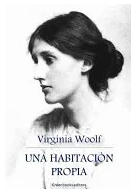


En una época en la que las mujeres solo podían ser musas en el campo de la Literatura, Virginia Woolf se atrevió a levantar su voz transformando su fragilidad en palabra construyendo identidad que fue silenciada pero que hoy día sigue resonando en aquellos que buscamos…
Nos dice Woolf en su «A Room O One´s Own que una mujer debe tener un espacio propio e independencia económica, algo impensable en aquellos momentos pero ella buscaba que no fuera solamente una metáfora sino que existiera la posibilidad de ser alguien en esa sociedad patriarcal que sometía plenamente a las mujeres a sus padres primero, a sus esposos después.


Es la negación de una oportunidad suficiente para silenciar a una persona, sin tiempo ni espacio propio, una cárcel invisible sin lugar a dudas.
Se encontró en su escritura no solo una forma de denuncia sino también nuevas formas de narración, un estilo que se inmersionaba en el ser, en esas emociones y pensamientos encontrados que el alma femenina susurra y que no podían ser conocidas.
Una forma de romper y a la vez escuchar la vida en profundidad, dar vida a esas voces interiores convirtiendolos en protagonistas de sus novelas como podemos ver al leer «Mrs. Dalloway» o «Al faro»
Y queda su profunda herida causada por la presión de un mundo que no aceptaba su singularidad, su tristeza alojada en su corazón que la llevo a suicidarse. Recordar que hay una agrieta abierta en ese abismo de silencio en el que residen todas aquellas escritoras y creadoras, pensadoras que no tuvieron permiso para ser.
Reconstruir sus silencios mientras las lees es una labor encomiable que no debemos dejar de hacer.
@María José Luque Fernández
<<<<>>>>
TRADUCCIÓN AL INGLÉS
The Silenced Voices: Virginia Woolf and the Search for a Room of One’s Own by María José Luque Fernández
At a time when women could only be muses in the field of Literature, Virginia Woolf dared to raise her voice, transforming fragility into words, building an identity that was silenced yet still resonates today with those of us who search…
Woolf tells us in A Room of One’s Own that a woman must have a room of her own and economic independence, something unthinkable in those days. Yet she sought for this to be more than just a metaphor: she wanted there to be a real possibility for women to exist as individuals within a patriarchal society that subjected them fully—first to their fathers, and later to their husbands.
The denial of opportunity is enough to silence a person: without time or a space of one’s own, it becomes an invisible prison without a doubt.
In her writing she found not only a way of denouncing injustice but also new forms of narration—a style immersed in the self, in those conflicting emotions and thoughts whispered by the female soul, which could not otherwise be known.
It was a way of breaking and at the same time listening deeply to life, of giving voice to those inner worlds, turning them into protagonists of her novels, as we can see when reading Mrs. Dalloway or To the Lighthouse.
And yet there remains her deep wound, caused by the pressure of a world that refused to accept her uniqueness—the sadness housed in her heart that led her to suicide.
We must remember that there is still a crack open in that abyss of silence where so many women writers, creators, and thinkers who were never permitted to be still reside. To reconstruct their silences as we read them is a remarkable task, and one we must never abandon.
@María José Luque Fernández